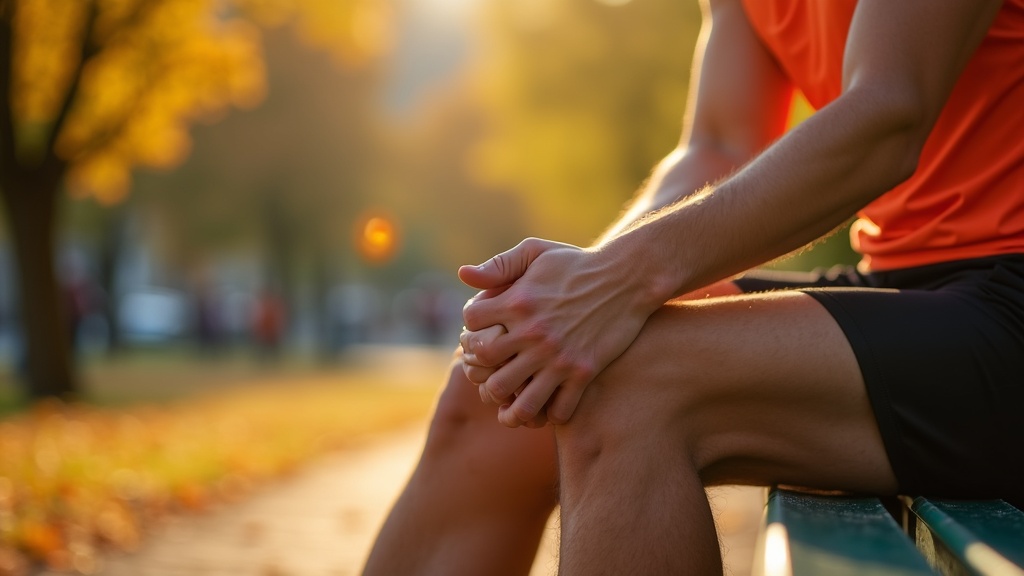
If you’ve felt a dull ache around or behind your kneecap during a run, especially going downhill or down stairs, you’ve probably dealt with runner’s knee. It’s one of the most common complaints among runners, and it has a way of sneaking up on you. One day you’re fine, the next your knee feels cranky and sore.
Runner’s knee isn’t actually damage to your knee joint itself. It’s more about how your kneecap moves when you bend and straighten your leg. When something is off with that movement, whether it’s muscle imbalance, tightness, or just doing too much too soon, the area around your kneecap gets irritated. The medical term is patellofemoral pain, but that just means pain around the kneecap.
The frustrating part is that most advice out there either tells you to rest indefinitely or sends you down a rabbit hole of clinical terminology. Rest alone usually isn’t enough, and you shouldn’t need a medical degree to figure out what to do next.
The good news is that runner’s knee usually responds really well to simple, targeted steps you can do at home. We’re talking about specific exercises, smart adjustments to how you move, and practical ways to support your recovery without abandoning running altogether. You don’t need expensive equipment or a physical therapy appointment to get started, though seeing a professional is always an option if things aren’t improving.
This guide walks you through what actually works, in language that makes sense, so you can get back to running without the nagging pain.
First, make sure it’s safe to self-manage
Before you start treating runner’s knee at home, you need to know whether it’s actually safe to do so. Most knee pain from running responds well to self-care, but some situations need a doctor’s attention right away.
Watch out for these red flags. If your knee is seriously swollen, that’s different from a little puffiness after a run. If your knee locks up, gives way beneath you, or you can’t put weight on it at all, don’t try to push through. The same goes if you heard or felt a pop when the pain started, especially during a sudden movement or fall.
You should also get checked out if your knee feels hot to the touch and looks red, or if you have a fever along with the pain. These can signal infection or inflammation that needs medical treatment. And if you notice any numbness or tingling around your knee or down your leg, that’s worth a professional look.
Here’s a simple rule of thumb for the less dramatic cases. If you rest smartly for a week or two and your knee pain isn’t getting better at all, see someone. Also get it checked if the pain comes back immediately when you try very light activity, like walking up a few stairs.
Runner’s knee typically improves with rest and the right exercises. If yours doesn’t follow that pattern, or if something feels seriously wrong, trust your gut. It’s always better to get one unnecessary checkup than to ignore something that needs real attention.
Calm the irritation before trying to ‘strengthen through it’
Your knee is annoyed. Think of it like a rope burn on your hand. You wouldn’t immediately start doing pull-ups to fix it. You’d let the irritation settle first, then get back to normal use.
The same logic applies here. Before you jump into exercises or try to strengthen your way out of runner’s knee, you need to dial down the inflammation and let your knee move without constantly aggravating it.
For the next week or two, cut your running volume in half. If you normally run four times a week, drop to two. If you run an hour, try thirty minutes. Skip steep hills and speedwork entirely. Those put extra stress on the kneecap and will keep the problem alive.
Around the house, avoid the moves that make your knee complain. Deep squats, kneeling, and climbing lots of stairs can all stir things up. You don’t need to become sedentary, just stop poking the bear.
Ice or heat can help calm things down. Use whichever feels better to you for ten to fifteen minutes at a time, a few times a day. Some people swear by ice after activity. Others prefer warmth before moving around. There’s no wrong answer.
Gently move your knee through its range of motion throughout the day. Straighten it, bend it, but don’t force anything. The goal is to keep it from getting stiff while avoiding pain.
Here’s your pain guideline: during and after any activity, your knee discomfort should stay mild. If it flares up later that day or the next morning, you overdid it. That lingering pain means the tissue didn’t get a chance to settle. Dial back further and give it more time.
Find the training change that likely set it off
Runner’s knee doesn’t just appear out of nowhere. Something changed in the weeks before it started hurting. Your job now is to play detective and figure out what that was.
The most common culprit is a sudden jump in how much you’re running. Maybe you added an extra day each week, or stretched your long run from five miles to eight. Your knee wasn’t ready for the extra load, even if the rest of you felt fine.
Speed work and hills are sneaky triggers too. They put way more stress on your knees than easy running, even if the total distance stays the same. If you recently started doing intervals, tempo runs, or added a hilly route, that’s probably your answer.
New shoes can also be the problem, especially if they’re very different from your old pair. Same goes for switching surfaces. Going from soft trails to hard pavement, or the other way around, changes how your knee absorbs impact.
Coming back too fast after time off is another classic mistake. A week or two away from running means your body needs to rebuild tolerance gradually, not pick up where you left off.
Think back two to four weeks before the pain started. What changed? Write it down. Then reverse that change or dial it way back for the next few weeks. If you jumped mileage, drop it down. If you added speed, go back to easy runs only.
Keep simple notes as you go. Jot down your mileage, how your knee feels on a scale of one to ten, and what you did differently. This helps you spot patterns and know when you’re actually improving.
Use a small set of home exercises that support the kneecap track
You don’t need a gym membership or fancy equipment to help your knee. Most runner’s knee comes from weak or unbalanced muscles around the hip and thigh. When those muscles aren’t doing their job, your kneecap gets pulled off track with every step.
Start with a few simple moves you can do at home. Glute bridges work well—lie on your back, feet flat, and lift your hips. Hold for a few seconds, then lower. Side-lying leg raises target the outer hip, which helps keep your knee stable. If you have a resistance band, try side steps or band walks. These feel awkward at first, but that’s the point.
For the front of your thigh, try sit-to-stand exercises from a chair or couch. Lower yourself slowly, then stand back up. If that feels too easy, try step-downs on a low step or stair, lowering one foot toward the floor with control. Wall sits can help too—lean against a wall with knees bent, hold for 20 to 30 seconds. Add calf raises if you want.
Choose a difficulty that feels challenging but controlled. You should be able to do each movement smoothly without wobbling or pain shooting through your knee. Aim for three or four times a week, not every single day. Your muscles need rest to get stronger.
You’ll know it’s working when stairs feel easier, your knee feels more stable during runs, and you’re not as sore the next day. If your quads or hip flexors feel tight, some gentle stretching after your exercises can feel good, but it’s not mandatory for everyone. Listen to your body, not a rigid rule.
Return to running without re-irritating the knee
Before you lace up again, make sure you’re actually ready. You should be able to walk for at least thirty minutes without pain during or after. Stairs shouldn’t feel great, but they shouldn’t make you wince either. Most importantly, you should wake up the next day without your knee feeling angry or swollen. If you’re not there yet, give it a few more days.
When you do start running again, think smaller and easier. Cut your usual distance in half, or even more. Stick to flat routes if you can. Hills put extra stress on the knee, and you don’t need that right now. If a short run still feels like too much, try run-walk intervals instead. Run for two minutes, walk for one, and repeat. There’s no shame in easing back in.
Rest days matter more than you think at this stage. Run one day, take the next day off. Your knee needs time to adapt without getting overwhelmed. If everything feels fine after a week or two, you can start adding a little more. Add five minutes to your runs before you worry about going faster. Change one thing at a time so you know what your knee can handle.
What if the pain comes back? Don’t panic, and don’t push through it. Drop back to whatever level felt okay before and stay there for a few more days. Sometimes your knee just needs a gentler ramp. This isn’t failure. It’s listening to your body, which is exactly what runner’s knee self-care is all about.